Whether you’re looking to start your career in plumbing, retrain for a new industry, or gain the qualifications needed to progress, choosing the right training provider is an important first step.
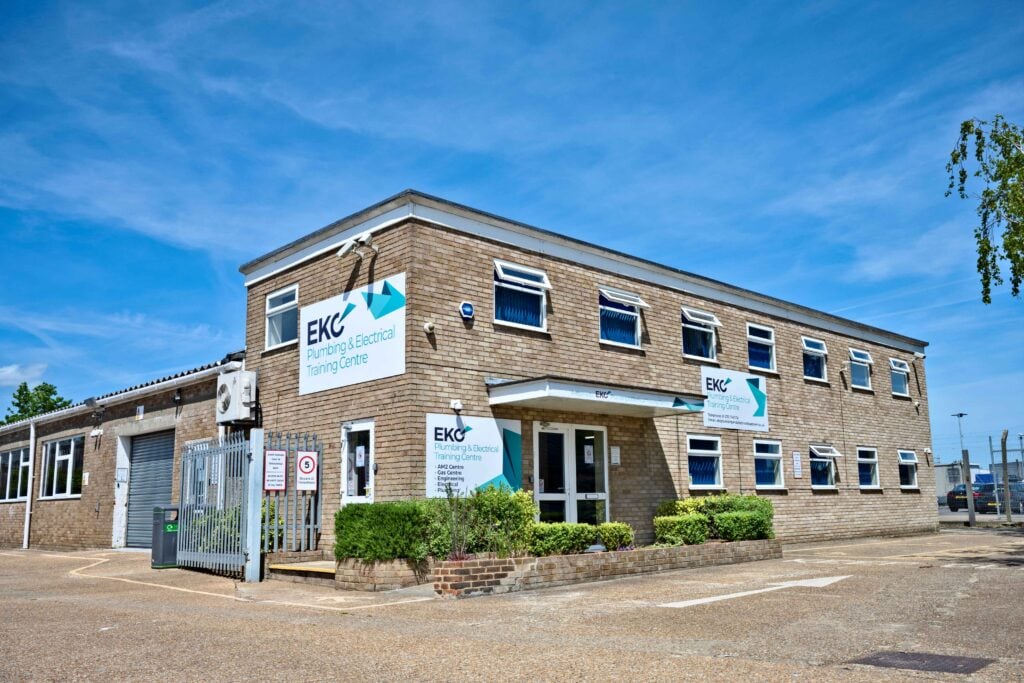
We spoke to Shaun McDonagh, Head of our Plumbing and Electrical Training Centre, based in Ashford, about what makes our Centre unique, the benefits of learning in-person, and how his team can help you build the skills and confidence needed for a successful career in Plumbing.
What is unique about the Plumbing and Electrical Training Centre?
“It’s unique in the way that the adults who join us can focus solely on their learning.
“It’s a self-contained centre where it’s their own environment, and there’s no 16–18-year-olds like there may be at a main College campus.
“We start all students off on a Level 1 Award. During that Award time frame, you’ll do a health and safety unit and a working construction unit.
“At the end, if you’re not quite ready for a Level 2 provision, we move you on to an area of that Level 1 qualification called a Certificate. That’s where you would practice your pipework skills, your scaffold tower building, all your sort of practical elements to build up to a Level 2.”
What’s the benefit of studying in-person at a Training Centre?
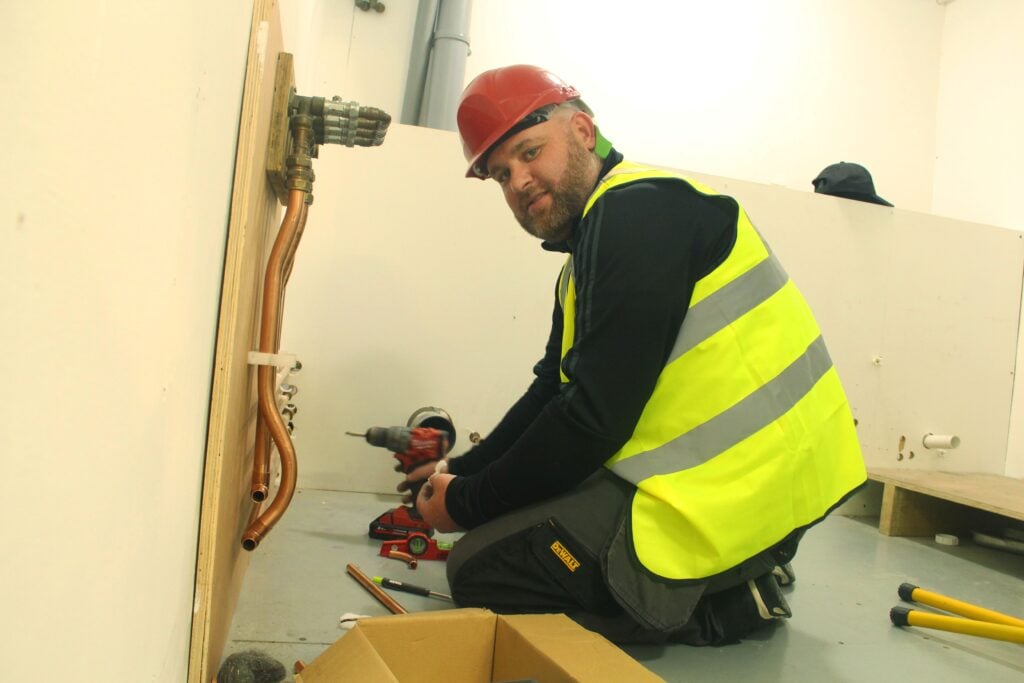
“When you’re studying, we’d like you to be in the workshop at the same time so you can explore the practical elements too. This could include hot water cylinders, hot water maintenance and so forth.
“When you’re working towards a central heating exam, you’d also be validating your knowledge in the workshop, working on radiators, power flushing, central heating systems.
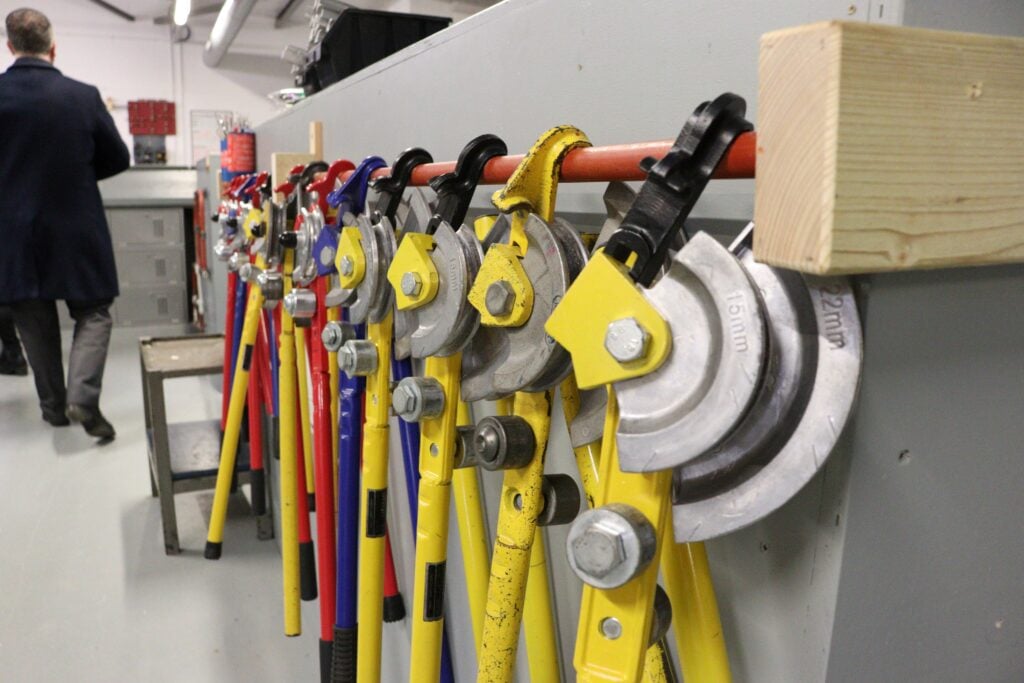
“If you join the course in September, by the end of September, you’d be fabricating copper pipe, using all the materials, soldering efficiently before you’re then self-sufficient in our workshops.”
What background do the learners come from?
“A lot of students that are applying for the courses now, their main aim is to work with renewable energy or heat pumps, but the entry requirements for this specialist work are a minimum of a Level 2 Diploma or a Level 2 NVQ, which we offer.
“At the moment, we’ve got many students from all different professionalisms. We’ve got farmers, we’ve got ex-soldiers, we’ve got students that have moved over from different countries.
“Lots of students who come in the front door with no experience whatsoever, leave the course as quite well-rounded plumbers.
“We don’t stop at that Level 2 course. We stretch and challenge you. We give you lots of additional add-on courses, because we know there is a skills gap out there.
“If you have a Level 2 qualification, plus lots of knowledge in other systems, such as flush systems, you’re quite employable.”
Can you give us some examples of success from the Centre?
“One student, he was on the programme for about 12 months. He’s now got his own business.
“Another student wasn’t in work for five or six years. Within 12 months of being with us, he applied for a job, which we helped him with. He’s now successfully working for a company.
“We get a lot of dyslexic students that have gone through school being undiagnosed. So, at school, that might have been a need, which in actual fact, by the time they’re 25, 30, is quite a high need. We support them with all their reading and writing which I’m proud of.”
How do you ensure all learners, including those with additional learning and language needs, can succeed?
“We use different IT software, such as OneNote, to transcribe, to annotate onto documents, and provide regular feedback to all students constantly.
“We can also help build up your confidence up with CVs and job applications. We’ll also support you with all the IT parts of the course.
“You’ll be set up on Microsoft Teams so you can get all your resources.
“Many students have had a bit of a negative experience of education, so we need them to understand, or become confident with us, that we’re much more supportive.
“The staff are all well-trained. We all go on regular development to be able to challenge and support those different learning styles.”
Ready to start your career in Plumbing? Explore our courses today and discover how the Plumbing and Electrical Training Centre can help you achieve your goals.
More articles

Apprentice receives first Gold Award in the Aspire to Excellence programme

Five reasons to learn English and Maths